Beginner Yoga Routines for Stress Relief: Find Your Inner Calm
Yoga, an ancient practice uniting mind, body, and spirit, offers a powerful antidote to the stresses of modern life. For beginners, the vast landscape of yoga can seem daunting. This article demystifies the process, providing accessible routines specifically designed to alleviate stress and promote well-being. We’ll explore foundational poses, breathing techniques, and mindful practices you can easily integrate into your daily life, regardless of your flexibility or experience.
Understanding the Stress-Yoga Connection
Chronic stress triggers the body’s “fight-or-flight” response, releasing hormones like cortisol and adrenaline. Prolonged activation of this system can lead to anxiety, fatigue, digestive issues, and even cardiovascular problems. Yoga counteracts these effects by:
- Activating the Parasympathetic Nervous System: This “rest and digest” system slows the heart rate, lowers blood pressure, and promotes relaxation.
- Releasing Muscle Tension: Holding yoga poses, particularly restorative ones, encourages the release of physical tension accumulated in the body.
- Improving Body Awareness: By focusing on your breath and bodily sensations, yoga enhances your awareness of stress triggers and provides tools to manage them proactively.
- Boosting Mood: Certain yoga poses stimulate the release of endorphins, natural mood elevators that combat feelings of anxiety and depression.
- Cultivating Mindfulness: Yoga emphasizes being present in the moment, which helps quiet the mental chatter that fuels stress and worry.
Essential Principles for Beginner Yoga
Before diving into specific routines, keep these key principles in mind:
- Listen to Your Body: Yoga is not about achieving perfect poses. Prioritize comfort and modify poses as needed. Never push yourself beyond your limits.
- Focus on Your Breath: The breath is the anchor of your practice. Consciously inhale and exhale deeply throughout each pose and transition.
- Consistency is Key: Even 15-20 minutes of daily yoga can significantly reduce stress levels. Aim for regular practice rather than infrequent, intense sessions.
- Find a Qualified Instructor: Consider taking a beginner yoga class or working with a certified instructor to learn proper alignment and avoid injuries. Online resources are also available, but ensure they come from reputable sources.
- Create a Calm Environment: Practice in a quiet space free from distractions. Dim the lights, play relaxing music, or use aromatherapy to enhance the experience.
- Hydrate: Drink plenty of water before, during, and after your practice.
- Be Patient: Yoga is a journey, not a destination. It takes time and practice to develop strength, flexibility, and mental clarity.
Beginner Yoga Routine #1: Gentle Flow for Relaxation
This routine focuses on gentle movements and deep breathing to release tension and calm the mind.
-
Child’s Pose (Balasana): Kneel on the floor with your big toes touching. Sit back on your heels (use a pillow or blanket under your hips if needed). Exhale and fold forward, resting your forehead on the floor. Extend your arms forward or rest them alongside your body. Hold for 5-10 breaths. Benefits: Calms the mind, relieves stress and fatigue, gently stretches the hips, thighs, and ankles.
-
Cat-Cow Pose (Marjaryasana to Bitilasana): Come onto your hands and knees, ensuring your wrists are directly under your shoulders and your knees are directly under your hips. Inhale and arch your back, dropping your belly towards the floor (Cow Pose). Lift your head and tailbone. Exhale and round your spine towards the ceiling, tucking your chin to your chest (Cat Pose). Repeat 5-10 times, synchronizing your breath with your movement. Benefits: Stretches the spine, abdomen, and hips; stimulates digestive organs; improves posture.
-
Downward-Facing Dog (Adho Mukha Svanasana): From hands and knees, tuck your toes and lift your hips up and back, forming an inverted V-shape. Press firmly into your hands and feet, lengthening your spine. Pedal your feet to stretch your hamstrings. Hold for 5-10 breaths. Benefits: Energizes the body, stretches the hamstrings, calves, and shoulders; strengthens the arms and legs; calms the brain. (Modification: If hamstrings are tight, keep knees slightly bent.)
-
Warrior II (Virabhadrasana II): From Downward-Facing Dog, step your right foot forward between your hands. Ground your left heel and turn your left foot slightly inward. Inhale and raise your arms parallel to the floor, reaching forward with your right arm and back with your left arm. Bend your right knee directly over your right ankle. Gaze over your right fingertips. Hold for 5 breaths. Repeat on the other side. Benefits: Strengthens the legs and arms; improves balance and stability; opens the hips and chest. (Modification: Reduce the depth of the bend in the front knee.)
-
Triangle Pose (Trikonasana): From Warrior II, straighten your right leg. Reach forward with your right hand, then hinge at your hips and lower your right hand towards your shin, ankle, or the floor. Extend your left arm towards the ceiling. Gaze towards your left hand. Hold for 5 breaths. Repeat on the other side. Benefits: Stretches the hamstrings, calves, and spine; strengthens the legs and abdomen; improves balance. (Modification: Rest your lower hand on your shin or use a block for support.)
-
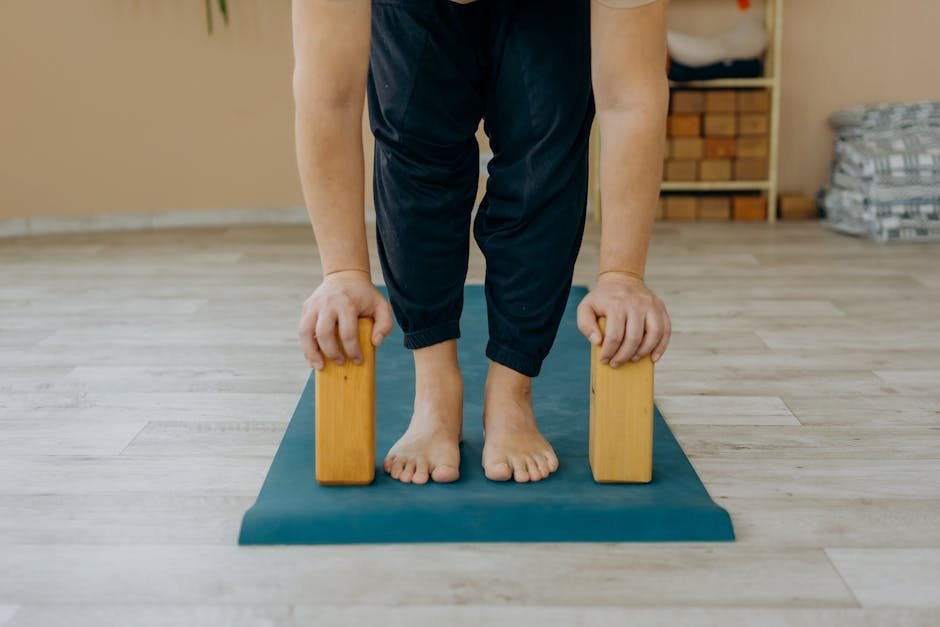
Standing Forward Bend (Uttanasana): From Triangle Pose, return to standing and stand with your feet hip-width apart. Exhale and fold forward from your hips, keeping your spine long. Let your head hang heavy. Hold for 5-10 breaths. Benefits: Calms the brain and relieves stress and mild depression; stretches the hamstrings, calves, and spine; relieves headache and insomnia. (Modification: Keep knees slightly bent.)
-
Mountain Pose (Tadasana): From Standing Forward Bend, slowly roll up to standing, vertebra by vertebra. Stand tall with your feet hip-width apart, arms at your sides. Engage your core and lengthen your spine. Ground your feet and lift the crown of your head towards the ceiling. Close your eyes and focus on your breath. Hold for 5-10 breaths. Benefits: Improves posture; grounds and stabilizes the body; cultivates a sense of presence.
Beginner Yoga Routine #2: Restorative Yoga for Deep Relaxation
This routine utilizes props like pillows, blankets, and bolsters to support the body in passive poses, promoting deep relaxation and stress reduction.
-
Supported Child’s Pose (Balasana Variation): Place a bolster or several folded blankets between your thighs and chest. Kneel on the floor with your big toes touching. Sit back on your heels. Exhale and fold forward, resting your torso on the bolster. Turn your head to one side. Hold for 5-10 minutes.
-
Supported Bridge Pose (Setu Bandhasana Variation): Lie on your back with your knees bent and your feet flat on the floor. Place a bolster or block under your sacrum (the bony plate at the base of your spine). Rest your arms at your sides, palms facing up. Hold for 5-10 minutes. Benefits: Gently opens the chest and shoulders; relieves lower back pain; calms the nervous system.
-
Legs-Up-the-Wall Pose (Viparita Karani): Sit with your right hip close to a wall. Gently swing your legs up the wall while lowering your shoulders and head to the floor. Rest your arms at your sides, palms facing up. Use a blanket under your hips if needed. Hold for 5-10 minutes. Benefits: Relieves swollen ankles and tired legs; calms the nervous system; reduces anxiety and mild depression.
-
Savasana (Corpse Pose): Lie on your back with your legs extended and your arms at your sides, palms facing up. Close your eyes and relax your entire body. Release any tension in your muscles. Focus on your breath. Hold for 10-15 minutes. Benefits: Promotes deep relaxation; reduces stress and anxiety; cultivates mindfulness.
Breathing Techniques (Pranayama) for Stress Relief
Integrating breathing exercises into your yoga practice or daily routine can significantly enhance stress reduction.
-
Diaphragmatic Breathing (Belly Breathing): Lie on your back with your knees bent and your feet flat on the floor. Place one hand on your chest and the other on your belly. Inhale deeply through your nose, allowing your belly to rise while keeping your chest relatively still. Exhale slowly through your mouth, allowing your belly to fall. Repeat for 5-10 minutes. Benefits: Calms the nervous system; reduces anxiety; improves oxygen intake.
-
Alternate Nostril Breathing (Nadi Shodhana): Sit comfortably with your spine straight. Close your right nostril with your right thumb and inhale deeply through your left nostril. Close your left nostril with your right ring finger and release your right nostril. Exhale through your right nostril. Inhale through your right nostril. Close your right nostril with your right thumb and release your left nostril. Exhale through your left nostril. Repeat for 5-10 minutes. Benefits: Balances the nervous system; reduces anxiety; improves focus and concentration.
Mindful Practices to Enhance Stress Reduction
Yoga is more than just physical postures. Cultivating mindfulness is essential for managing stress effectively.
-
Body Scan Meditation: Lie down or sit comfortably and bring your awareness to different parts of your body, starting with your toes and working your way up to your head. Notice any sensations, such as tension, pain, or warmth. Accept these sensations without judgment.
-
Walking Meditation: Walk slowly and deliberately, paying attention to the sensation of your feet making contact with the ground. Notice the movement of your body and the sounds around you.
-
Gratitude Journaling: Take a few minutes each day to write down things you are grateful for. Focusing on the positive aspects of your life can help shift your perspective and reduce stress.
Conclusion: Embarking on Your Yoga Journey
By incorporating these beginner yoga routines, breathing techniques, and mindful practices into your daily life, you can effectively manage stress, improve your overall well-being, and cultivate a greater sense of inner peace. Remember to listen to your body, be patient with yourself, and enjoy the process of discovering the transformative power of yoga.