Bodyweight Blitz: Mastering the Basics
For beginners, the best place to start is with bodyweight exercises. These require no equipment, making them accessible anywhere, and focus on building a solid foundation of strength and coordination. Focus on proper form before increasing repetitions or sets. Start with these essentials:
-
Squats: A cornerstone exercise targeting the quadriceps, hamstrings, and glutes. Stand with feet shoulder-width apart, toes slightly outward. Lower your hips as if sitting in a chair, keeping your back straight and chest up. Aim for thighs parallel to the floor, but only go as low as comfortable. Focus on engaging the core throughout the movement. Beginners can start with 3 sets of 10-12 repetitions. Common mistakes include rounding the back, knees caving inward, and not reaching sufficient depth. To correct these, practice in front of a mirror and consciously activate your glutes and core.
-
Push-Ups: A classic upper-body exercise engaging the chest, shoulders, and triceps. Start in a plank position with hands slightly wider than shoulder-width apart. Lower your body until your chest nearly touches the floor, keeping your body in a straight line. Push back up to the starting position. If standard push-ups are too difficult, modify them by performing them on your knees. Beginners can start with 3 sets of as many repetitions as possible (AMRAP), focusing on maintaining good form. Common mistakes include sagging hips, flared elbows, and incomplete range of motion. To correct these, engage your core to maintain a straight line and focus on controlled movements.
-
Lunges: A unilateral exercise targeting the quadriceps, hamstrings, and glutes, while also improving balance. Stand with feet hip-width apart. Step forward with one leg, lowering your body until both knees are bent at 90-degree angles. Ensure your front knee stays behind your toes. Push back up to the starting position and repeat on the other leg. Beginners can start with 3 sets of 10-12 repetitions per leg. Common mistakes include knees extending past the toes, leaning too far forward, and inadequate depth. To correct these, focus on maintaining a vertical shin on the front leg and activating your glutes to push back up.
-
Plank: An isometric exercise that strengthens the core. Start in a push-up position, but with your forearms on the ground. Keep your body in a straight line from head to heels, engaging your core muscles to prevent your hips from sagging. Hold for as long as possible, gradually increasing the duration over time. Beginners can start with 3 sets of 30-second holds. Common mistakes include sagging hips, arching the back, and holding the breath. To correct these, focus on maintaining a neutral spine and breathing deeply throughout the exercise.
-
Bird Dog: Improves core stability, balance, and coordination. Start on your hands and knees. Extend your right arm forward and your left leg backward simultaneously, keeping your back straight and your core engaged. Hold for a few seconds, then return to the starting position and repeat on the other side. Beginners can start with 3 sets of 10-12 repetitions per side. Common mistakes include arching the back, rotating the hips, and losing balance. To correct these, focus on maintaining a straight line from head to heel and engaging your core throughout the movement.
Cardio Kickstart: Elevating Your Heart Rate
Cardiovascular exercise is essential for overall health and fitness. These beginner-friendly options require minimal equipment and can be easily incorporated into a home workout routine:
-
Walking: A low-impact activity that can be done anywhere, anytime. Start with brisk walks of 20-30 minutes, gradually increasing the duration and intensity over time. Consider incorporating hills or varied terrain for an added challenge.
-
Jogging: A step up from walking, jogging provides a more intense cardiovascular workout. Start with short intervals of jogging and walking, gradually increasing the jogging time and decreasing the walking time. Focus on maintaining good posture and a comfortable pace.
-
Jumping Jacks: A classic calisthenic exercise that raises your heart rate quickly. Stand with feet together and arms at your sides. Jump and spread your feet apart while simultaneously raising your arms overhead. Jump back to the starting position and repeat. Beginners can start with 3 sets of 20-30 repetitions.
-
High Knees: A dynamic exercise that engages the core and leg muscles. Stand with feet hip-width apart. Alternate bringing your knees up towards your chest, aiming for a high knee raise. Beginners can start with 3 sets of 20-30 repetitions per leg.
-
Butt Kicks: A dynamic exercise that targets the hamstrings and glutes. Stand with feet hip-width apart. Alternate bringing your heels up towards your glutes, kicking your butt with each repetition. Beginners can start with 3 sets of 20-30 repetitions per leg.
Flexibility Focus: Enhancing Range of Motion
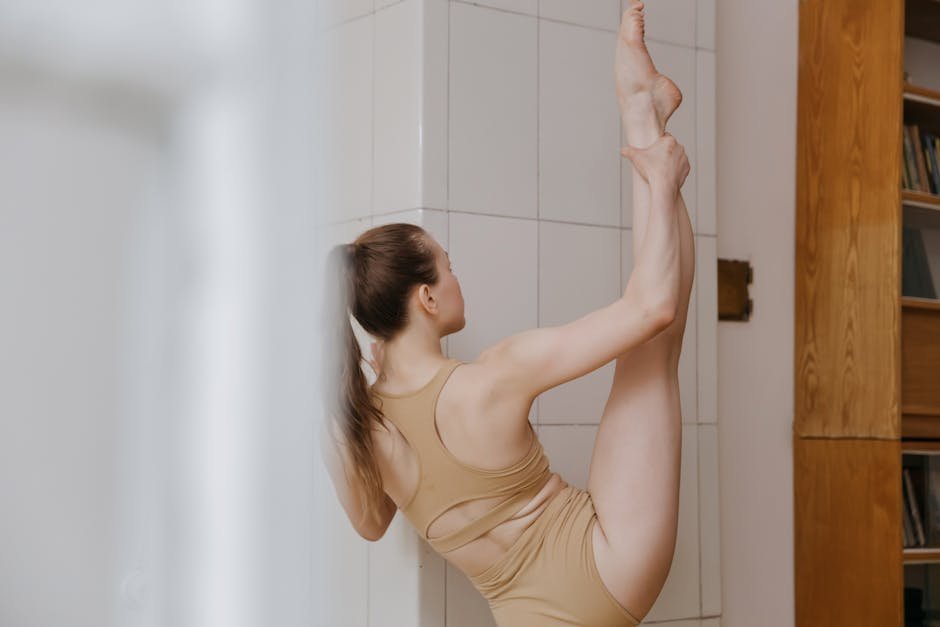
Flexibility is often overlooked but is crucial for preventing injuries and improving overall mobility. Incorporate these stretches into your routine after your workouts:
-
Hamstring Stretch: Sit on the floor with your legs extended. Reach towards your toes, keeping your back straight and your knees slightly bent. Hold for 30 seconds.
-
Quadriceps Stretch: Stand and hold onto a chair or wall for balance. Grab your ankle and gently pull your heel towards your glutes. Hold for 30 seconds per leg.
-
Chest Stretch: Stand in a doorway and place your forearms on the frame. Lean forward until you feel a stretch in your chest. Hold for 30 seconds.
-
Triceps Stretch: Reach your arm overhead and bend your elbow, bringing your hand down towards your upper back. Use your other hand to gently pull your elbow further down. Hold for 30 seconds per arm.
-
Calf Stretch: Stand facing a wall and place your hands on the wall at shoulder height. Step one foot back, keeping your heel on the ground and your leg straight. Lean forward until you feel a stretch in your calf. Hold for 30 seconds per leg.
Progressive Overload: Consistent Improvement
To continue seeing results, it’s important to progressively overload your muscles. This means gradually increasing the intensity or volume of your workouts over time. Here are some ways to apply progressive overload:
-
Increase Repetitions: Gradually increase the number of repetitions you perform for each exercise.
-
Increase Sets: Gradually increase the number of sets you perform for each exercise.
-
Increase Duration: Gradually increase the duration of your cardiovascular workouts.
-
Increase Intensity: Gradually increase the intensity of your exercises by using resistance bands, weights, or more challenging variations.
-
Reduce Rest Time: Gradually decrease the amount of rest you take between sets.
Workout Structure: Building a Routine
Here’s a sample workout routine that incorporates the exercises mentioned above:
- Warm-up (5 minutes): Jumping jacks, high knees, butt kicks, arm circles.
- Strength Training (30 minutes):
- Squats: 3 sets of 10-12 repetitions
- Push-ups: 3 sets of AMRAP
- Lunges: 3 sets of 10-12 repetitions per leg
- Plank: 3 sets of 30-second holds
- Bird Dog: 3 sets of 10-12 repetitions per side
- Cardio (20 minutes): Jogging/walking intervals
- Cool-down and Stretching (10 minutes): Hamstring stretch, quadriceps stretch, chest stretch, triceps stretch, calf stretch.
This routine can be performed 3-4 times per week, with rest days in between. Remember to listen to your body and adjust the routine as needed.
Nutrition and Hydration: Fueling Your Body
Proper nutrition and hydration are essential for supporting your workouts and achieving your fitness goals.
- Eat a Balanced Diet: Focus on consuming whole, unprocessed foods, including fruits, vegetables, lean protein, and whole grains.
- Stay Hydrated: Drink plenty of water throughout the day, especially before, during, and after your workouts.
- Fuel Your Workouts: Consume a pre-workout snack that is high in carbohydrates and protein to provide energy for your workout.
- Recover After Your Workouts: Consume a post-workout meal or snack that is high in protein and carbohydrates to help your muscles recover and rebuild.
Remember to consult with a healthcare professional or registered dietitian for personalized nutrition advice.
Consistency and Patience: The Keys to Success
The most important factors for success are consistency and patience. Stick to your workout routine as consistently as possible, even when you don’t feel like it. Results take time and effort, so be patient with yourself and celebrate your progress along the way. Don’t get discouraged if you don’t see results immediately. Keep showing up and putting in the work, and you will eventually reach your goals.